

-
Seminar KTNS Chancellor Course: Regularity theory à la De Giorgi for elliptic, parabolic and kinetic equations
Updated on Aug 15, 2025 01:14 PM PDT -
Workshop Introductory Workshop: Kinetic Theory & Stochastic Partial Differential Equations
Organizers: Davar Khoshnevisan (University of Utah), Qin Li (University of Wisconsin-Madison), LEAD Konstantin Matetski (Michigan State University), Andrea Nahmod (University of Massachusetts, Amherst), Chiara Saffirio (Universität Basel), Xiangchan Zhu (Chinese Academy of Sciences)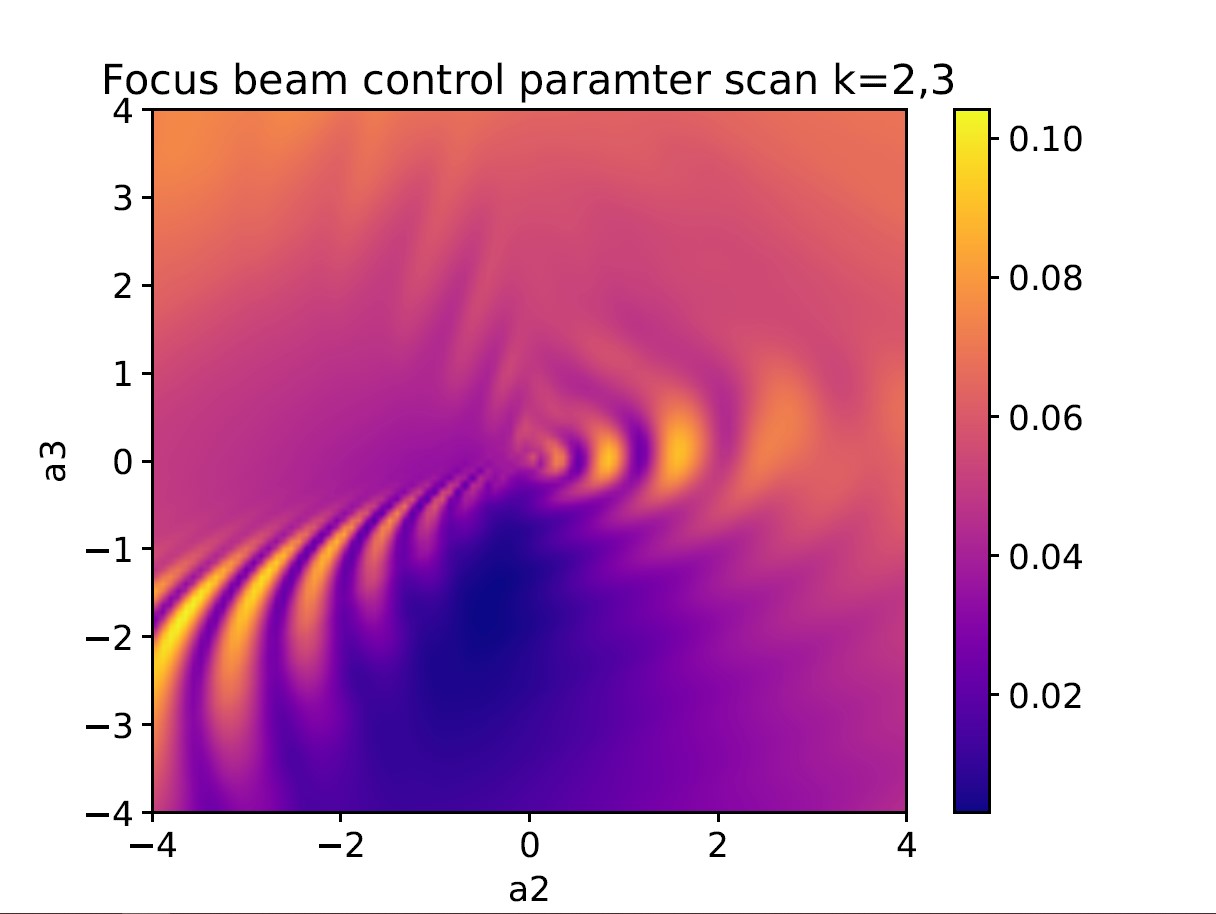 Parameter scan for deploying external electric field to control two-stream instability for Vlasov-Poisson.
The goal of the workshop is to introduce non-experts to two active research areas: kinetic theory and stochastic partial differential equations. Kinetic theory studies the properties of interacting particle systems modeling various processes in non-equilibrium statistical mechanics. Stochastic partial differential equations describe dynamics subjected to random noises. The methods from the two areas complement each other in studies of the phenomena arising in physics, economics, life sciences, etc.
Updated on Aug 28, 2025 10:56 AM PDT -
Workshop Pathways Workshop: Kinetic Theory & Stochastic Partial Differential Equations
Organizers: LEAD Raluca Balan (University of Ottawa), François Golse (Centre de Mathématiques Laurent Schwartz, École Polytechnique), Qin Li (University of Wisconsin-Madison), Xiaoming Song (Drexel University; Drexel University), Rongchan Zhu (Beijing Institute of Technology)
The Pathways workshop will bring together leading experts working at the intersection of kinetic theory and stochastic partial differential equations (SPDEs).
Updated on Aug 22, 2025 11:48 AM PDT -
Program Complementary Program 2025-26
The Complementary Program has a limited number of memberships that are open to mathematicians whose interests are not closely related to the core programs; special consideration is given to mathematicians who are partners of an invited member of a core program.
Updated on Dec 03, 2024 03:13 PM PST -
Program Recent Trends in Stochastic Partial Differential Equations
Organizers: Sandra Cerrai (University of Maryland), Yu Gu (University of Maryland), Massimiliano Gubinelli (University of Oxford), Davar Khoshnevisan (University of Utah), Andrea Nahmod (University of Massachusetts, Amherst), Hao Shen (University of Wisconsin-Madison), LEAD Lorenzo Zambotti (Sorbonne Université)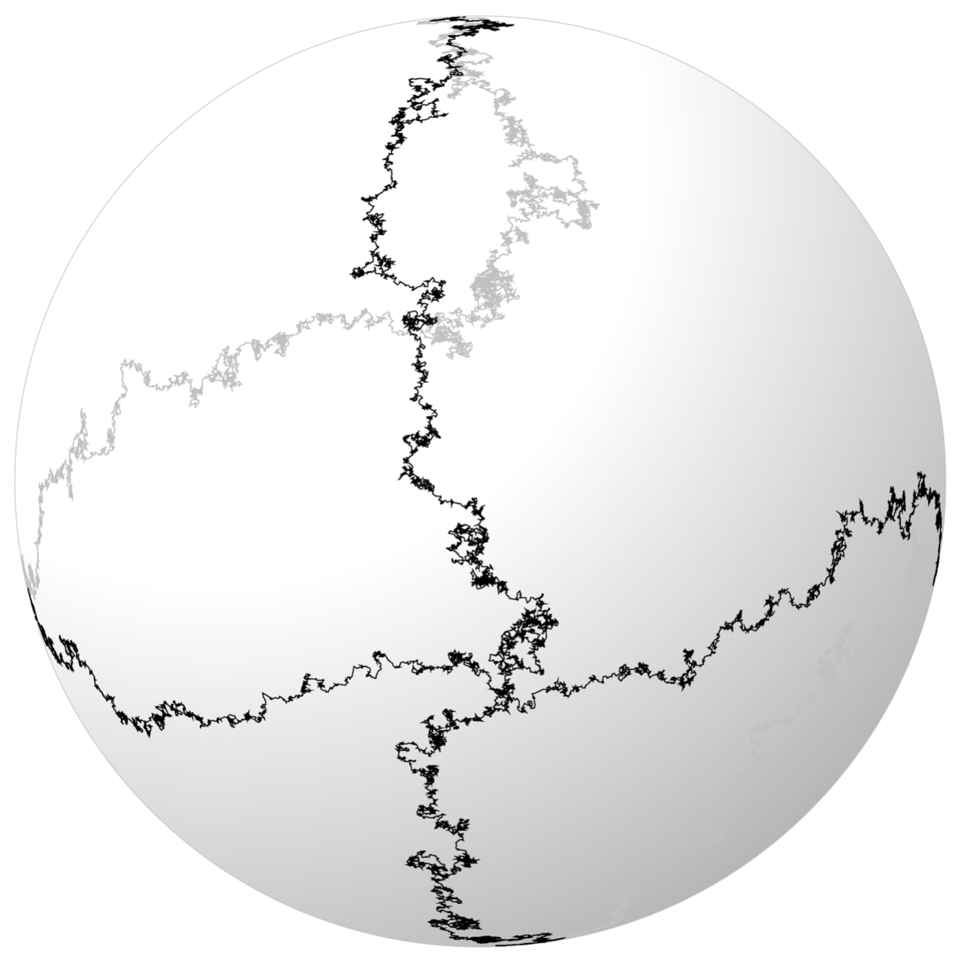 Solution to the geometric stochastic heat equation on the sphere at a fixed time
The topic Singular Stochastic Partial Differential Equations (singular SPDE) has rapidly grown to be an active research area at the interface of Stochastic Analysis and PDEs on one hand, and Mathematical Physics on the other hand. During this decade we have witnessed a series of tremendous breakthroughs in the solution theories of SPDEs, universality problems, large-scale asymptotic behaviors of solutions, and foundational relations with quantum field theories and geometry. Many long-standing problems have been resolved via newly developed methods – notably the theories of regularity structures and paracontrolled distributions – and deep connections with other fields are quickly emerging.
It is a natural time to convene a large-scale semester program.
Updated on Jul 09, 2024 04:18 PM PDT -
Program Kinetic Theory: Novel Statistical, Stochastic and Analytical Methods
Organizers: Laurent Desvillettes (Université Paris Cité), Irene M. Gamba (University of Texas, Austin), François Golse (Centre de Mathématiques Laurent Schwartz, École Polytechnique), Cyril Imbert (Université Paris Cité), LEAD Pierre-Emmanuel Jabin (Pennsylvania State University), Qin Li (University of Wisconsin-Madison), Chiara Saffirio (Universität Basel), Weiran Sun (Simon Fraser University), Lexing Ying (Stanford University)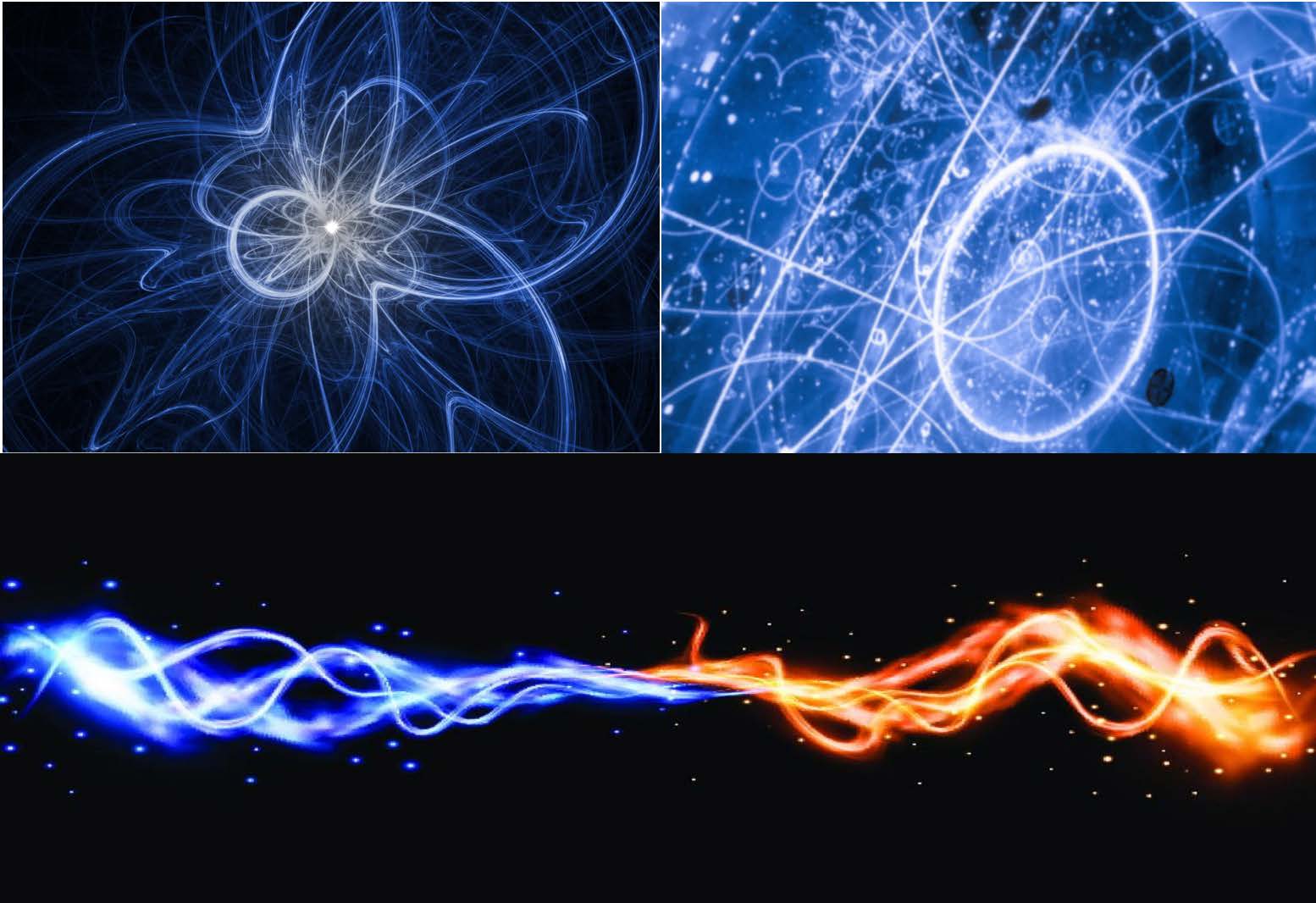 Top: Neutrino interactions and neutrino-atom interactions. Bottom: Collision of two "waves"
The focus of the proposed program is on so-called kinetic equations, describing the evolution of the of many-particle interacting systems. These models have the form of statistical flows, with their solutions being either a single or multiple point probability density functions or measures, supported in a space of attributes. The attributes are problem-dependent and can be molecular velocity, energy, opinion, wealth, and many others. The flow then predicts the evolution of the probability measure in time, position in space, and the interchanging of the particles' states by the transition probability.
The program will strive to give an overview of the novel mathematical tools used in kinetic theory through a broad range of classical and more recent applications.
Updated on Jul 23, 2025 01:24 PM PDT -
Summer Graduate School Topological and Geometric Structures in Low Dimensions (SLMath)
Organizers: LEAD Kenneth Bromberg (University of Utah), Kathryn Mann (Cornell University)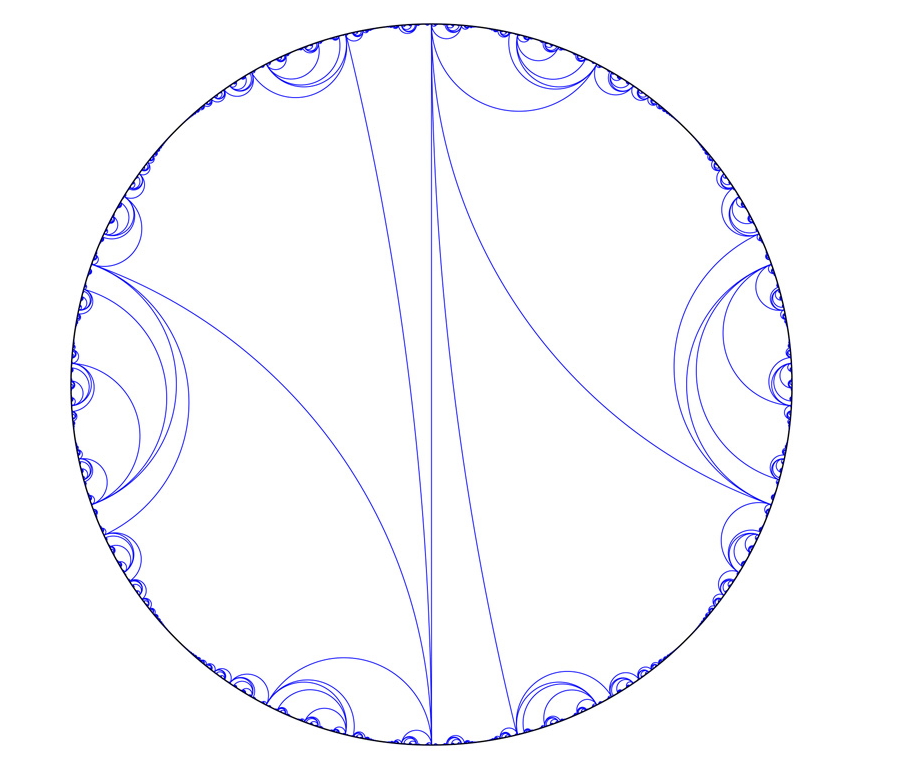 <p>Laminations arise naturally in hyperbolic geometry and (pseudo-) Anosov flows [Image by Jeffrey Brock]</p>
This school will serve as an introduction to the SLMath semester “Topological and Geometric Structures in Low-Dimensions”. The school consists of two mini-courses: one on Teichmüller Theory and Hyperbolic 3-Manifolds and the other on Anosov Flows on Geometric 3-Manifolds. Both topics lie at the interface of low-dimensional geometric topology (specifically, surfaces, foliations, and 3-manifolds) and low-dimensional dynamics. The first course will be targeted towards students who have completed the standard first year graduate courses in geometry, topology, and analysis while the second course will geared towards more advanced students who are closer to beginning research. However, we expect that all students will benefit from both courses.
Updated on Nov 03, 2025 12:23 PM PST -
Summer Graduate School Geometry and Dynamics in Higher Rank Lie Groups (UC Berkeley)
Organizers: Richard Canary (University of Michigan), Sara Maloni (University of Virginia), Wenyu Pan (University of Toronto; University of Toronto), Cagri Sert, LEAD Tengren Zhang (National University of Singapore)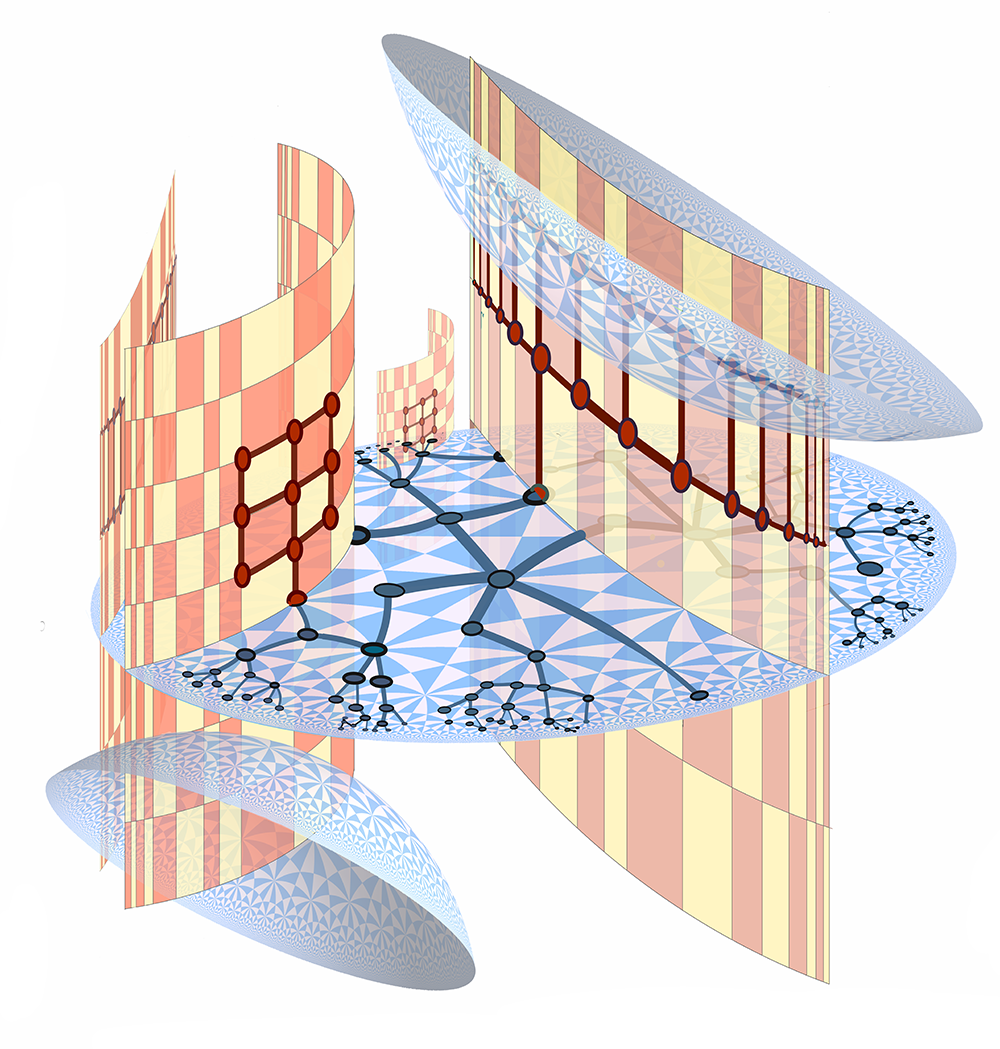 <p>Flats and hyperbolic planes in a higher rank symmetric space</p> Drawn by Steve Trettel.
Lie groups are central objects in modern mathematics; they arise as the automorphism groups of many homogeneous spaces, such as flag manifolds and Riemannian symmetric spaces. Often, one can construct manifolds locally modelled on these homogeneous spaces by taking quotients of their subsets by discrete subgroups of their automorphism groups. Studying such discrete subgroups of Lie groups is an active and growing area of mathematical research. The objective of this summer school is to introduce young researchers to a class of discrete subgroups of Lie groups, called Anosov subgroups.
Updated on Nov 03, 2025 01:16 PM PST -
Seminar ADJOINT/MSRI-UP panel
Created on May 13, 2025 11:33 AM PDT -
Summer Graduate School Principled Scientific Discovery with Formal Methods (IBM, Yorktown)
Organizers: Kenneth Clarkson (IBM Research Division), Cristina Cornelio (Samsung AI), Claudia D Ambrosio (École Polytechnique), Sanjeeb Dash (IBM Thomas J. Watson Research Center), Lior Horesh (IBM Thomas J. Watson Research Center)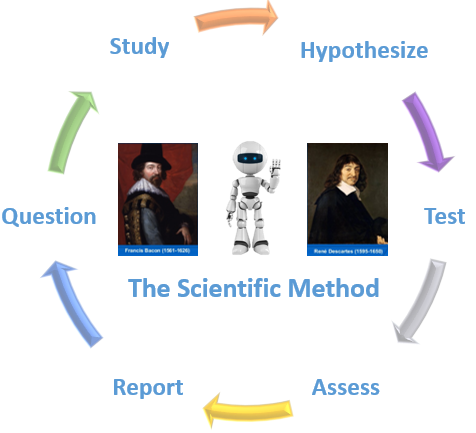 <p>The traditional scientific method cycle, with Francis Bacon and Rene Descartes, its concievers in the center, alongside formal and statistical AI machinary, as a propsective evolution of the method. <br /> </p>
The summer school aims to expose participants to formal methods that can facilitate principled scientific discovery. The school will cover some of the basic automated statistical inference (in the form of machine learning techniques) and reasoning methods that are commonly used in scientific discovery, as well as novel techniques developed to tackle open questions and issues. This summer school will address novel computational methods for scientific discovery and focus on fusing axiomatic knowledge and experimental data to enable principled derivations of models of natural phenomena along with certificates of the consistency of these models with background knowledge specified as axioms.
Updated on Aug 14, 2025 02:37 PM PDT -
Summer Graduate School Computer Assisted Proofs in Applied Mathematics (SLMath)
Organizers: LEAD Jonathan Jaquette (New Jersey Institute of Technology), Evelyn Sander (George Mason University)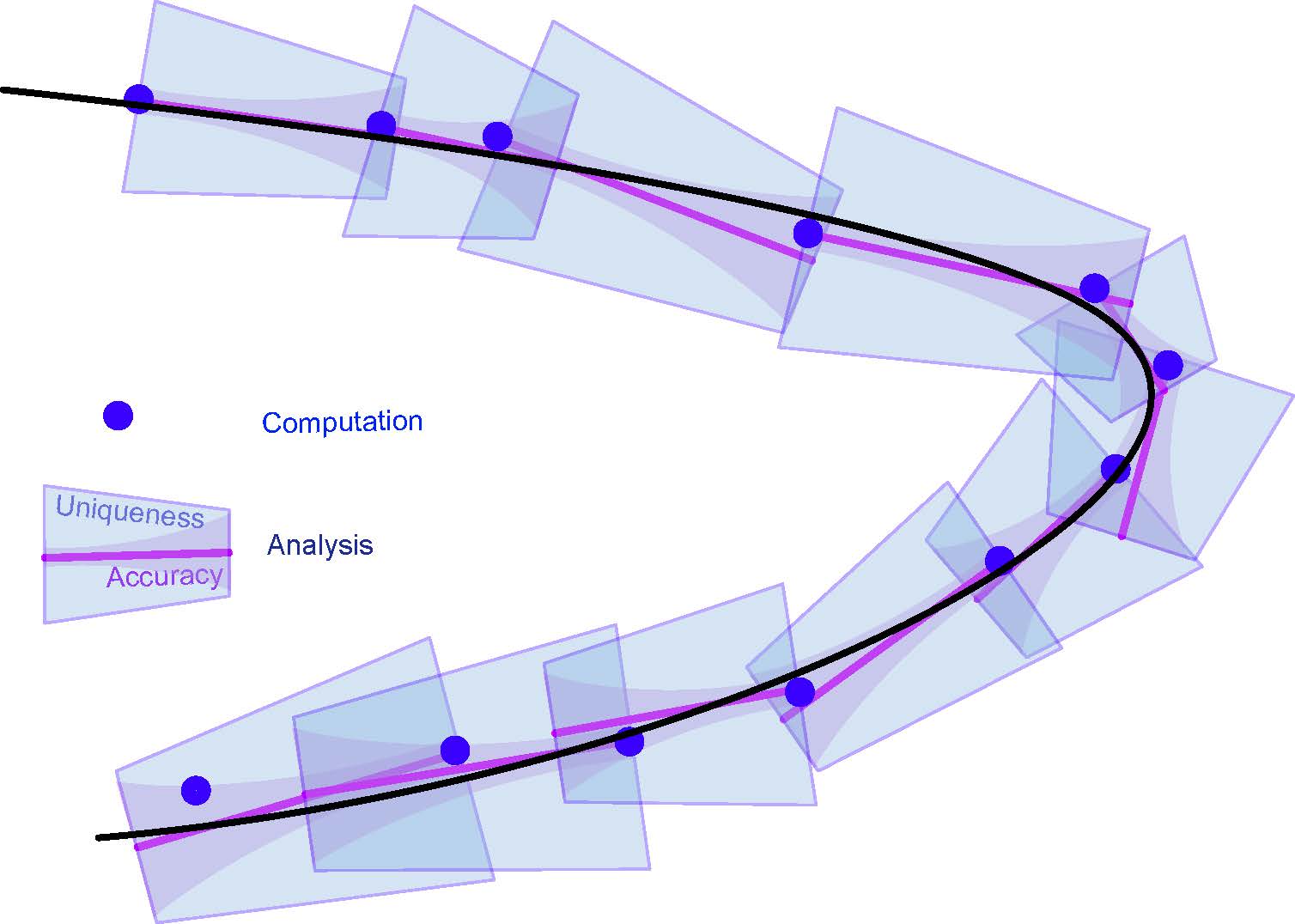
One of the core elements of applied mathematics is mathematical modeling consisting of nonlinear equations such as ODEs, and PDEs. A fundamental difficulty which arises is that most nonlinear models cannot be solved in closed form. Computer assisted proofs are at the forefront of modern mathematics and have led to many important recent mathematical advances. They provide a way of melding analytical techniques with numerical methods, in order to provide rigorous statements for mathematical models that could not be treated by either method alone. In this summer school, students will review standard computational and analytical techniques, learn to combine these techniques with more specialized methods of interval arithmetic, and apply these methods to establish rigorous results in otherwise intractable problems
Updated on Nov 03, 2025 01:45 PM PST -
African Diaspora Joint Mathematics ADJOINT 2025
ADJOINT is a yearlong program that provides opportunities for U.S. mathematicians to conduct collaborative research on topics at the forefront of mathematical and statistical research. Participants will spend two weeks taking part in an intensive collaborative summer session at SLMath. The two-week summer session for ADJOINT 2025 will take place June 30 - July 11, 2025 in Berkeley, California. Researchers can participate in either of the following ways: (1) joining ADJOINT small groups under the guidance of some of the nation's foremost mathematicians and statisticians to expand their research portfolio into new areas, or (2) applying to Self-ADJOINT as part of an existing or newly-formed independent research group ((three-to-five participants is preferred) to work on a new or established research project. Throughout the following academic year, the program provides conference and travel support to increase opportunities for collaboration, maximize researcher visibility, and engender a sense of community among participants.
Updated on Jun 06, 2025 10:11 AM PDT -
Summer Graduate School Noncommutative Algebraic Geometry (Antwerp, Belgium)
Organizers: Pieter Belmans (University of Luxembourg), Lander Hermans (Universiteit Antwerp), Wendy Lowen (Universiteit Antwerpen), Arne Mertens (Universiteit Antwerp), Michel VAN DEN BERGH (Hasselt University), Špela Špenko (Université Libre de Bruxelles)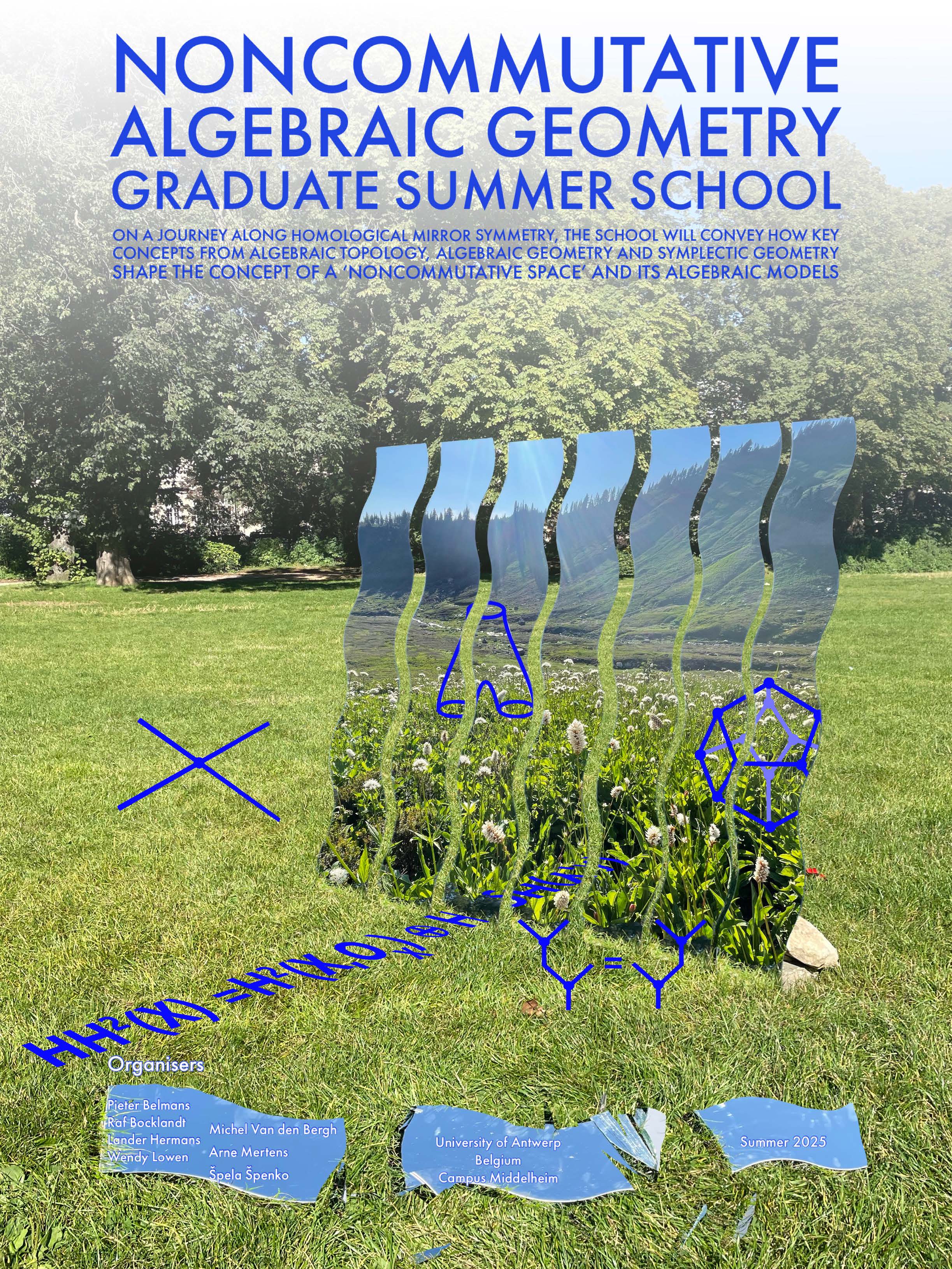
The school will consist of two courses: Homological Mirror Symmetry and Algebraic Models for Spaces. These courses will be planned and taught by organisers with the help of teaching assistants for the problem sessions. The school will be aimed at a wide range of graduate students, from students with a Bachelor degree to beginning PhD students. The lectures and problem sessions will be complemented by a poster session in week one and a total of four introductory research talks on Friday afternoons.
Updated on May 22, 2025 10:57 AM PDT -
Summer Graduate School New Perspectives on Discriminants and Applications (Leipzig, Germany)
Organizers: Eliana Duarte (Centro de Matemática da Universidade do Porto), Serkan Hosten (San Francisco State University), Simon Telen (Max-Planck-Institut)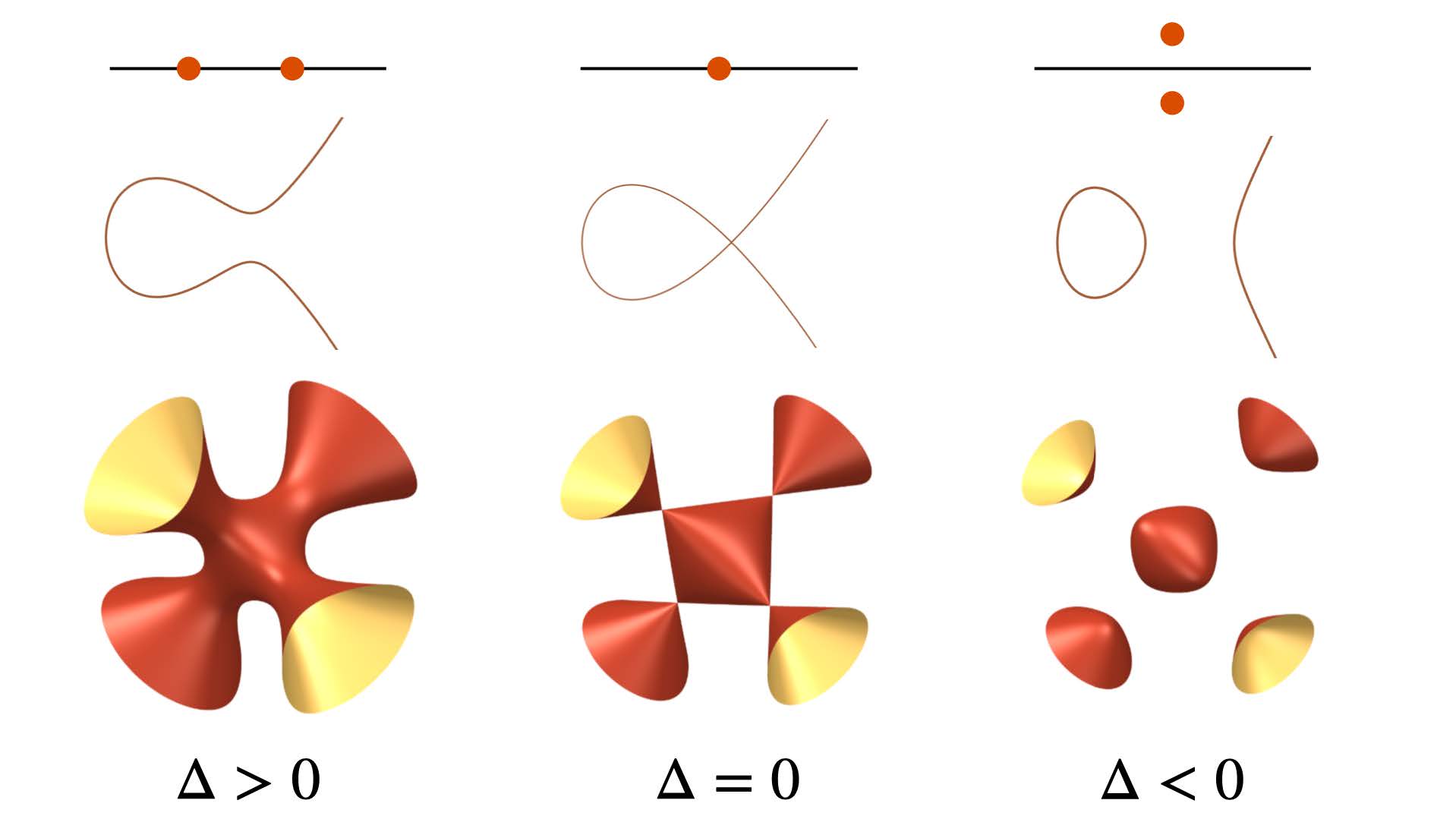 <p>The discriminant ∆ detects singular varieties. The picture shows three different scenarios: solutions of quadratic polynomials, cubic plane curves and cubic surfaces.</p>
This summer school will offer a hands-on introduction to discriminants, with a view towards modern applications. Starting from the basics of computational algebraic geometry and toric geometry, the school will gently introduce participants to the foundations of discriminants. A particular emphasis will be put on computing discriminants of polynomial systems using computer algebra software. Then, we will dive into three applications of discriminants: algebraic statistics, geometric modeling, and particle physics. Here, discriminants contribute to the study of maximum likelihood estimation, to finding practical parametrizations of geometric objects, and to computations of scattering amplitudes. We will explain recently discovered unexpected connections between these three applications. In addition to lectures, the summer school will have daily collaborative exercise sessions which will be guided by the teaching assistants and will include software demonstrations.
Updated on Jul 03, 2025 09:26 AM PDT -
Summer Graduate School Graphical Models in Algebraic Combinatorics (SLMath)
Organizers: Christian Gaetz (University of California, Berkeley), David Keating (University of Illinois at Urbana-Champaign; University of Illinois at Urbana-Champaign), Melissa Sherman-Bennett (University of California, Davis), LEAD Anna Weigandt (University of Minnesota; University of Minnesota, Twin Cities)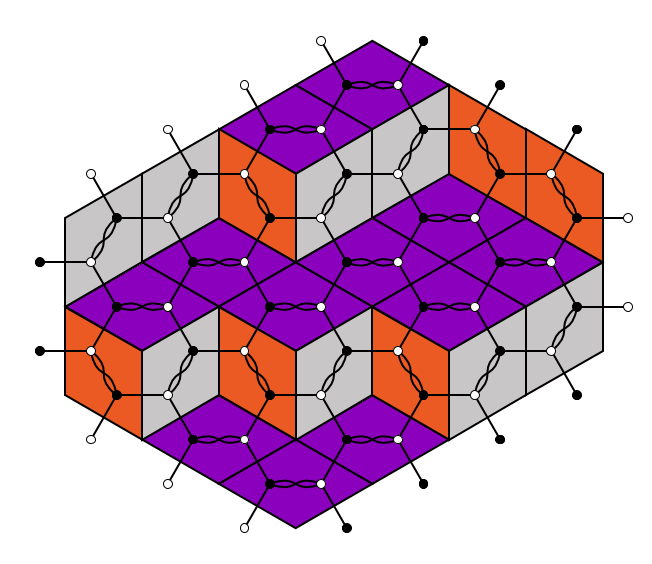 <p>A plane partition and an hourglass plabic graph</p>
This school will introduce students to a range of powerful combinatorial tools used to understand algebraic objects ranging from the homogeneous coordinate ring of the Grassmannian to symmetric functions. The summer school will center around two main lecture series "Webs and Plabic Graphs" and "Vertex Models and Applications". While the exact applications differ, both courses will center on graphical models for algebraic problems closely related to Grassmannian and its generalizations. This school will be accessible to a wide range of students. Students will leave the school with a solid grasp of the combinatorics of webs, plabic graphs, and the six-vertex model, an understanding of their algebraic applications, and a taste of current research directions.
Updated on Jul 02, 2025 10:42 AM PDT -
Summer Graduate School Mathematics of Sea Ice and Polar Ecosystems (Fairbanks, Alaska)
Organizers: Kenneth Golden (University of Utah), Jody Reimer (University of Utah)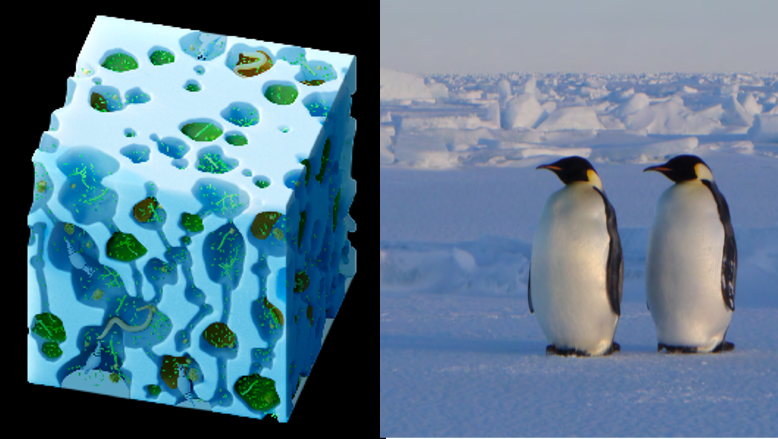 From micro to macro, sea ice supports life in the polar regions. Left: illustration of the porous sea ice microstructure, home to a microbial community of ice endemic organisms including bacteria and algae. Right: two penguins on Antarctic sea ice.
In this summer school, students will be introduced to mathematical and computational modeling of sea ice and polar ecosystems. As a material, sea ice is a multiscale composite structured on length scales ranging from tenths of millimeters to tens of kilometers. From tiny brine inclusions and surface melt ponds of increasing complexity, to ice floes of varying sizes in a seawater host, a principal challenge is how to find sea ice effective properties that are relevant to larger scale models, given data on smaller scale structures. Similarly, the sea ice ecosystem ranges from algae living in the brine inclusions to charismatic megafauna like penguins and polar bears, whose diets depend critically, down the line, on the tiny sea ice extremophiles. The dynamics of sea ice microbial communities are regulated by the physics of the ice microstructure, and, in turn, many of these microbes modify their environment by secreting extracellular polymeric substances. In addition to sea ice and its ecosystems, we will consider broader mathematical models including energy balance models, tipping points, and global circulation models.
Updated on Jun 10, 2025 09:42 AM PDT -
MSRI-UP MSRI-UP 2025: Quantitative Justice
Organizers: Alexander Diaz-Lopez (Villanova University), Maria Mercedes Franco, Rebecca Garcia (Colorado College), Omayra Ortega (Sonoma State University), Candice Price (Smith College), LEAD Robin Wilson (Loyola Marymount University)The MSRI-UP summer program is designed to serve a diverse group of undergraduate students who would like to conduct research in the mathematical sciences.
In 2025, MSRI-UP will focus on Quantitative Justice. The research program will be led by Dr. Omayra Y. Ortega, Associate Professor in the Department of Mathematics at Sonoma State University.
Updated on Dec 11, 2025 12:32 PM PST -
Summer Research in Mathematics 2025 Summer Research in Mathematics
SLMath's Summer Research in Mathematics (SRiM) program provides space, funding, and the opportunity for in-person collaboration to small groups of mathematicians, whose ongoing research may have been disproportionately affected by various obstacles including family obligations, professional isolation, or access to funding. Through this effort, SLMath aims to mitigate the obstacles faced by these groups, improve the odds of research project completion, and deepen their research experience. The ultimate goal of this program is to enhance the mathematical sciences as a whole by positively affecting the research and careers of all of its participants and assisting their efforts to maintain involvement in the research community.
Updated on Jun 06, 2025 10:10 AM PDT -
Summer Graduate School Statistical Optimal Transport (SLMath)
Organizers: LEAD Promit Ghosal (University of Chicago), Jonathan Niles Weed (New York University, Courant Institute), Marcel Nutz (Columbia University)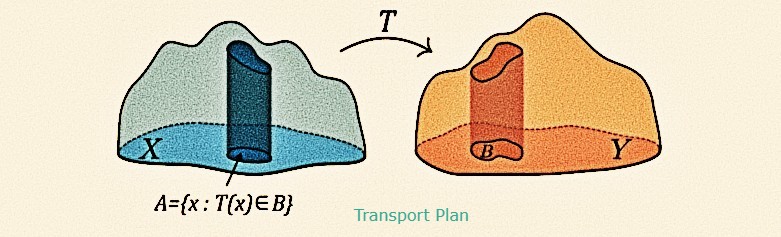
This summer school offers an exceptional opportunity for participants to delve into the intricate realm of statistical optimal transport theory. This captivating field stands at the crossroads of multiple disciplines, drawing from a rich tapestry of mathematical insights from diverse subjects, including partial differential equations, stochastic analysis, convex geometry, statistics, and machine learning, crafting a vibrant and interdisciplinary landscape. The foremost objective of this summer school is to create a dynamic learning environment that unites students from diverse backgrounds such as PDE theory, probability, or optimal transport.
Updated on Nov 03, 2025 01:32 PM PST -
Summer Graduate School Local Limits of Random Graphs (Paris-Saclay University, France)
Organizers: Ainhoa Aparicio-Monforte (Fondation Mathématique Jacques Hadamard (FMJH)), Alexandra Genesco (Fondation Mathématique Jacques Hadamard (FMJH)), LEAD Pascal Massart (Fondation Mathématique Jacques Hadamard (FMJH))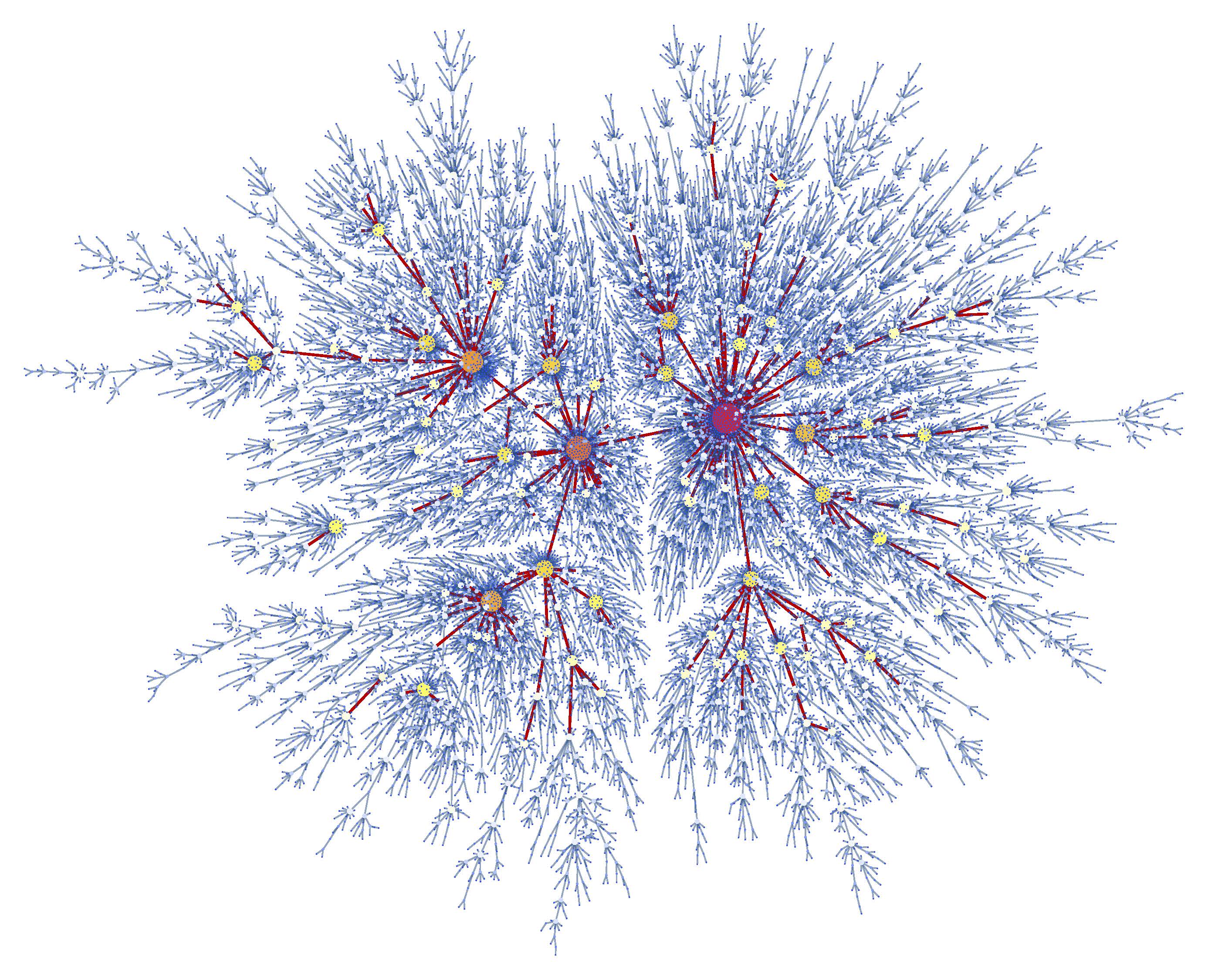 <p>A display of the evolution of an Erdos-Renyi random graph . </p>
Random graphs are ubiquitous in modern probability theory. Besides their intrinsic mathematical beauty, they are also used to model complex networks. In the early 2000’s, I. Benjamini and O. Schramm introduced a mathematical framework in which they endowed the set of locally finite rooted connected graphs with the structure of a Polish space, called the local topology. The goal of this summer school is to introduce the framework of local limits of random graphs, the concepts of Benjamini-Schramm (or unbiased) limits and unimodularity, as well as the most important applications. The lectures will be delivered by Nicolas Curien (Prof. Paris-Saclay University) and Justin Salez (Prof. Université Paris-Dauphine) and will be complemented by many problem sessions, where students will work in small groups under the guidance of teaching assistants, who are researchers in the field.
Updated on Jun 06, 2025 09:24 AM PDT
|
|
Past Scientific Events |